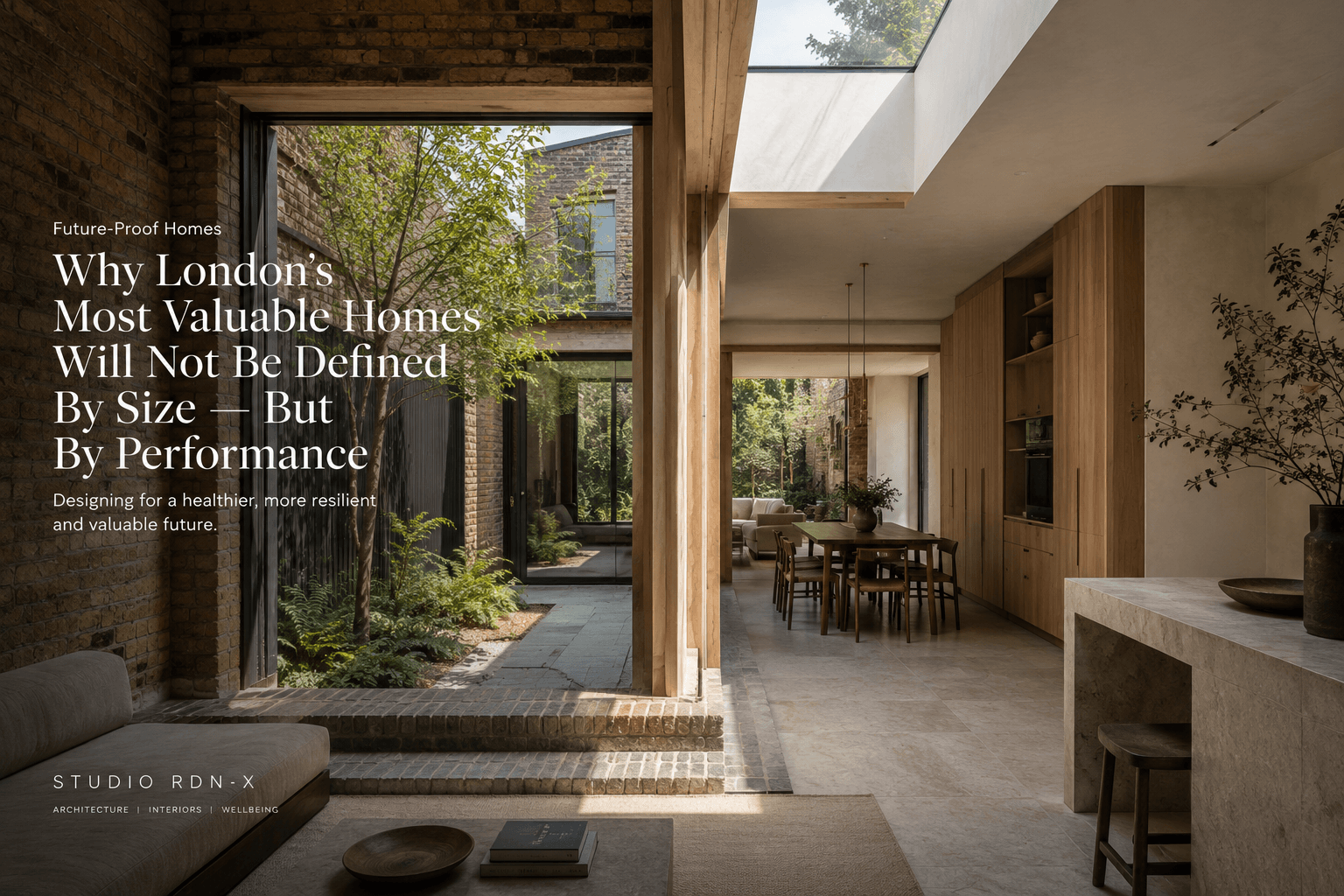
Why London's Most Valuable Homes Will Not Be Defined by Size — But By Performance
For decades, London home value meant more square metres and a better postcode. A quiet shift is underway: the strongest long-term value now belongs not to the largest homes, but to the ones that perform better.
For decades, residential value in London was measured through a relatively simple equation:
More square metres.
More bedrooms.
Better postcode.
Yet a quiet shift is taking place across the capital.
Increasingly, the homes commanding the strongest long-term value are not necessarily the largest homes. They are the homes that perform better.
Performance is becoming the new luxury.
This shift is being driven by a convergence of factors:
- Rising energy costs
- Evolving sustainability requirements
- Growing awareness of wellbeing and healthy buildings
- Climate resilience
- Embodied carbon considerations
- The increasing expectations of buyers, occupiers and investors
For homeowners, developers and investors alike, the question is no longer simply:
"How much space can I build?"
The question is becoming:
"How well does this building perform over the next 20 years?"
The End of the Square Metre Race
Historically, property value was largely linked to area.
An additional bedroom. A loft conversion. A rear extension.
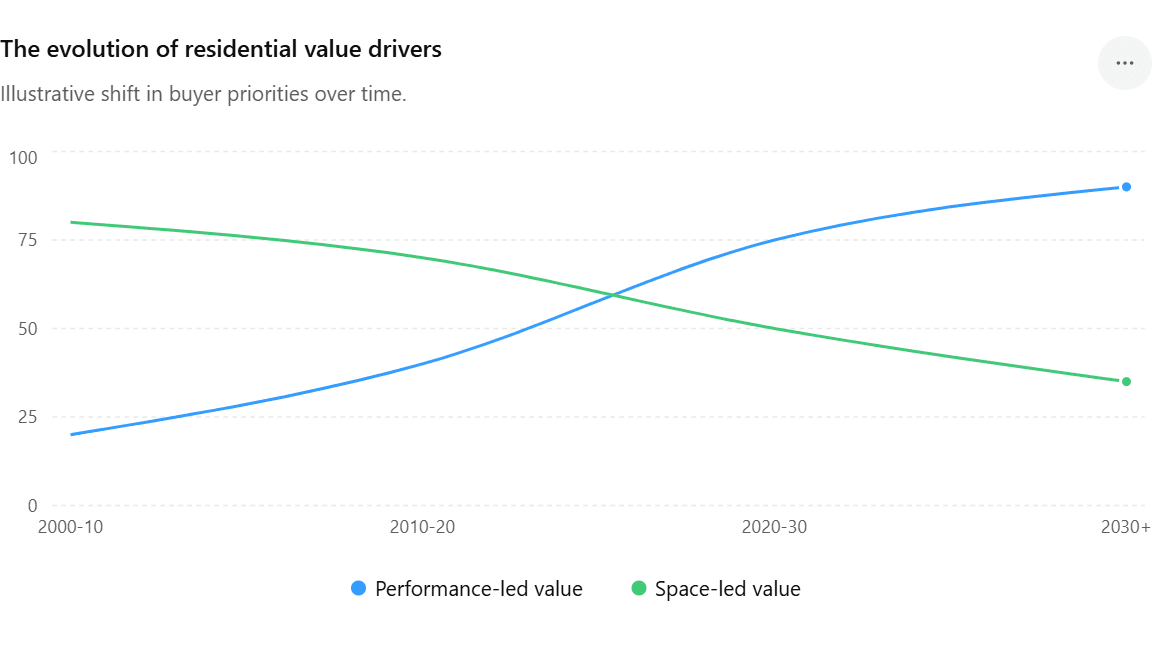
Whilst these interventions remain valuable, they are increasingly being assessed alongside another set of criteria:
- Energy performance
- Operational costs
- Thermal comfort
- Air quality
- Daylight quality
- Material durability
- Adaptability
- Long-term maintenance requirements
The market is beginning to recognise that larger buildings which are expensive to operate can become liabilities.
Meanwhile, well-designed homes that consume less energy, provide healthier environments and adapt to changing family needs are becoming increasingly attractive.
This trend is expected to accelerate as sustainability standards become more embedded within planning, development and lending frameworks.
The Rise of Building Performance
One of the most significant changes occurring within the construction industry is the growing emphasis on actual building performance rather than theoretical design performance.
Historically, many sustainability assessments relied heavily upon predictive modelling. The challenge is that buildings often behave differently once occupied. This phenomenon is commonly referred to as the performance gap.
Recent UK initiatives are increasingly focusing on measured outcomes rather than assumptions, requiring buildings to demonstrate how they perform in operation rather than solely how they were designed to perform. New net-zero standards are beginning to assess real operational data, recognising that actual energy consumption and carbon performance matter more than theoretical predictions.
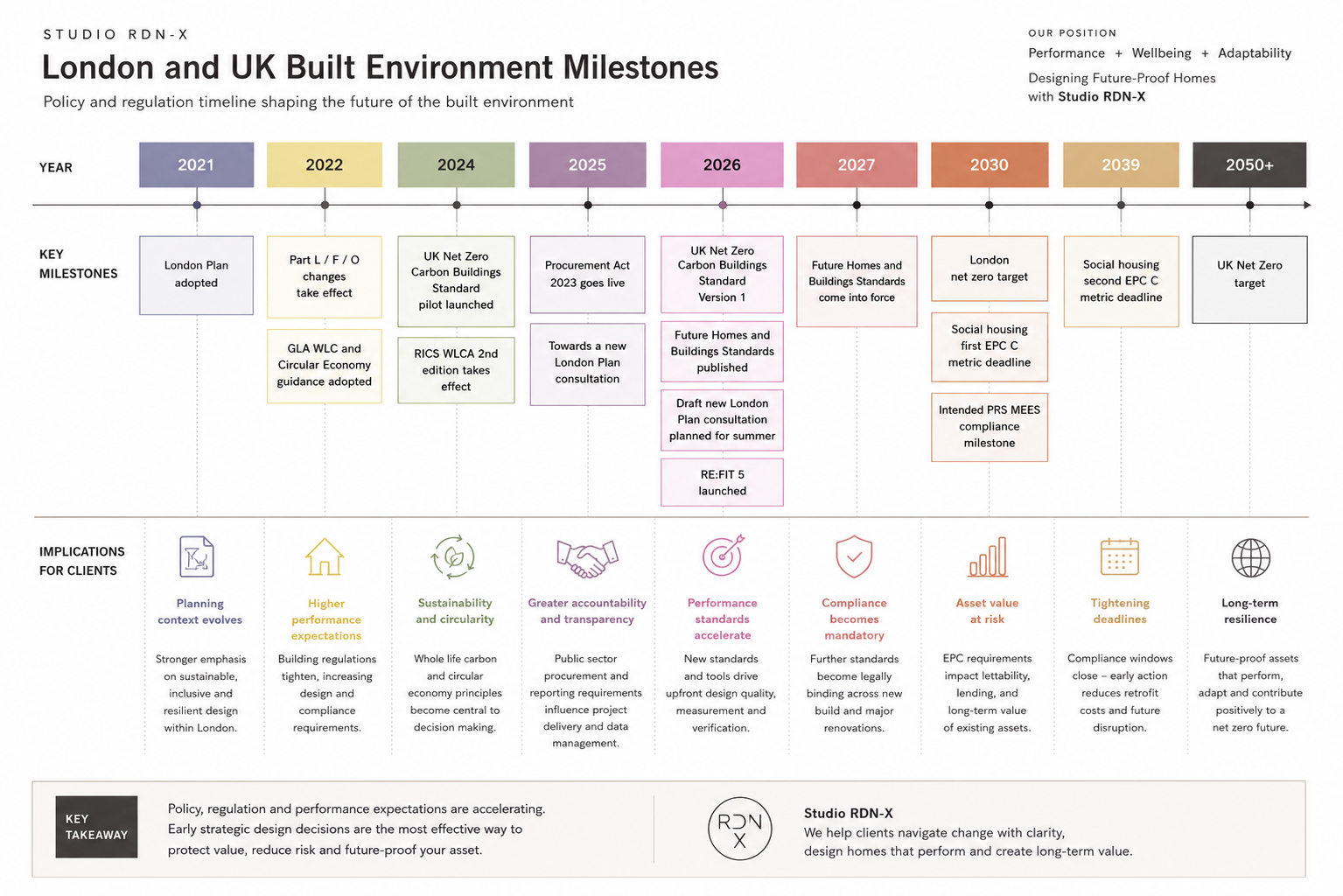
For clients, this represents an important shift. Good design is no longer simply about aesthetics. It is about measurable outcomes.
Embodied Carbon Is Becoming a Design Driver
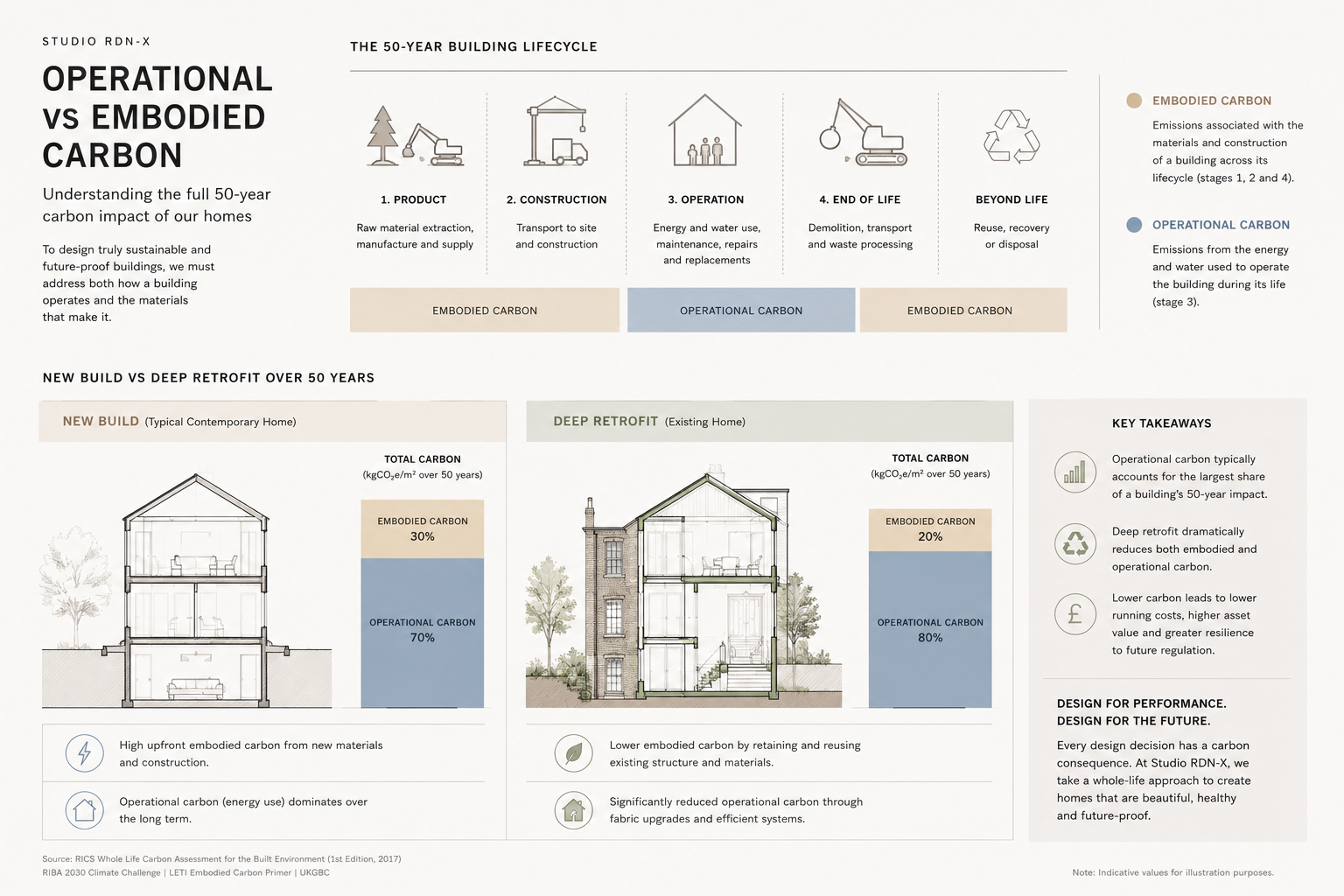
Whilst operational energy has rightly received significant attention over the past decade, another topic is rapidly moving into mainstream discussion: embodied carbon.
Embodied carbon refers to the emissions associated with materials, manufacture, transportation, construction and eventual replacement or disposal of building components. Research increasingly shows that embodied carbon can account for a substantial proportion of a building's lifetime environmental impact.
This is particularly relevant when considering:
- Extensions
- Loft conversions
- Refurbishments
- New-build homes
- Interior fit-outs
In many cases, retaining and adapting existing structures can provide significant environmental advantages compared with demolition and rebuilding. The construction industry increasingly recognises that reusing existing buildings often represents one of the most effective methods of reducing embodied carbon.
This principle aligns closely with Studio RDN-X's design approach. The question is not "What can we demolish?"
The question is: what value already exists here?
Wellness Is No Longer A Luxury Add-On
The pandemic fundamentally changed how people understand their homes.
Clients are increasingly asking questions about:
- Air quality
- Daylight
- Acoustics
- Mental wellbeing
- Connection to nature
- Flexibility for hybrid working
These are not trends. They are becoming baseline expectations.
Research across sustainable building sectors continues to demonstrate that environmental quality directly influences health, comfort and long-term building performance. Sustainable construction increasingly considers people alongside environmental and economic outcomes.
For Studio RDN-X, this sits at the centre of our work. A successful home is not merely efficient. It should support human wellbeing.
Why Retrofit Will Become The Defining Opportunity Of The Next Decade
The majority of London's future housing stock already exists.
This means that the challenge ahead is not simply designing new buildings. It is transforming existing ones.
Retrofitting existing homes can dramatically reduce operational energy demand while improving comfort, resilience and long-term value. Examples of deep refurbishment projects have demonstrated energy reductions exceeding 50% compared to baseline conditions.
For homeowners, this presents an opportunity.
The next generation of property value may not be created solely through expansion. It may be created through intelligent transformation.
A Worked Example: A Victorian Terrace, Future-Proofed
These principles are easier to read in practice. The case study below traces a typical London Victorian terrace — from its existing condition, through our design strategy, to a future-proofed whole-house retrofit.
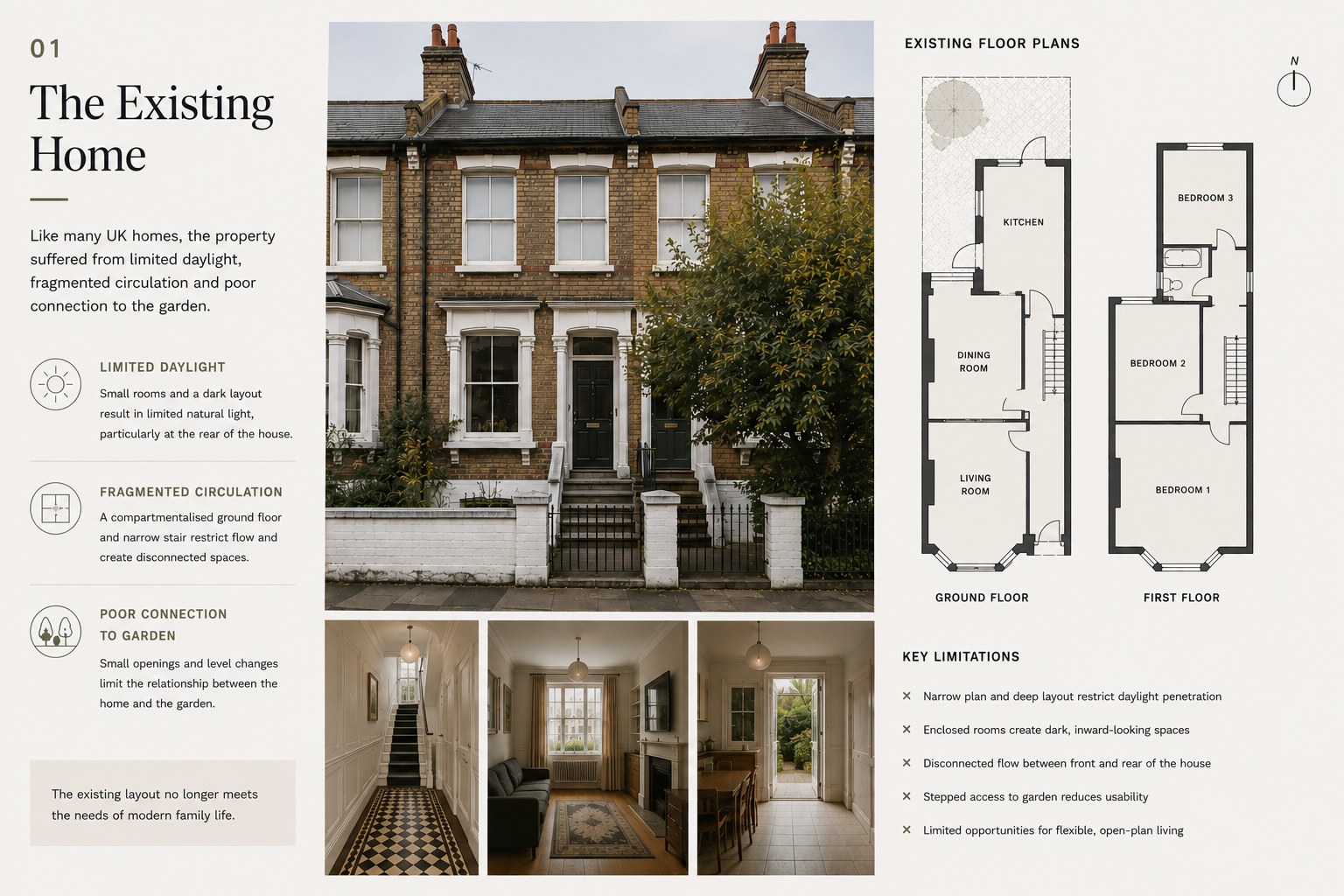
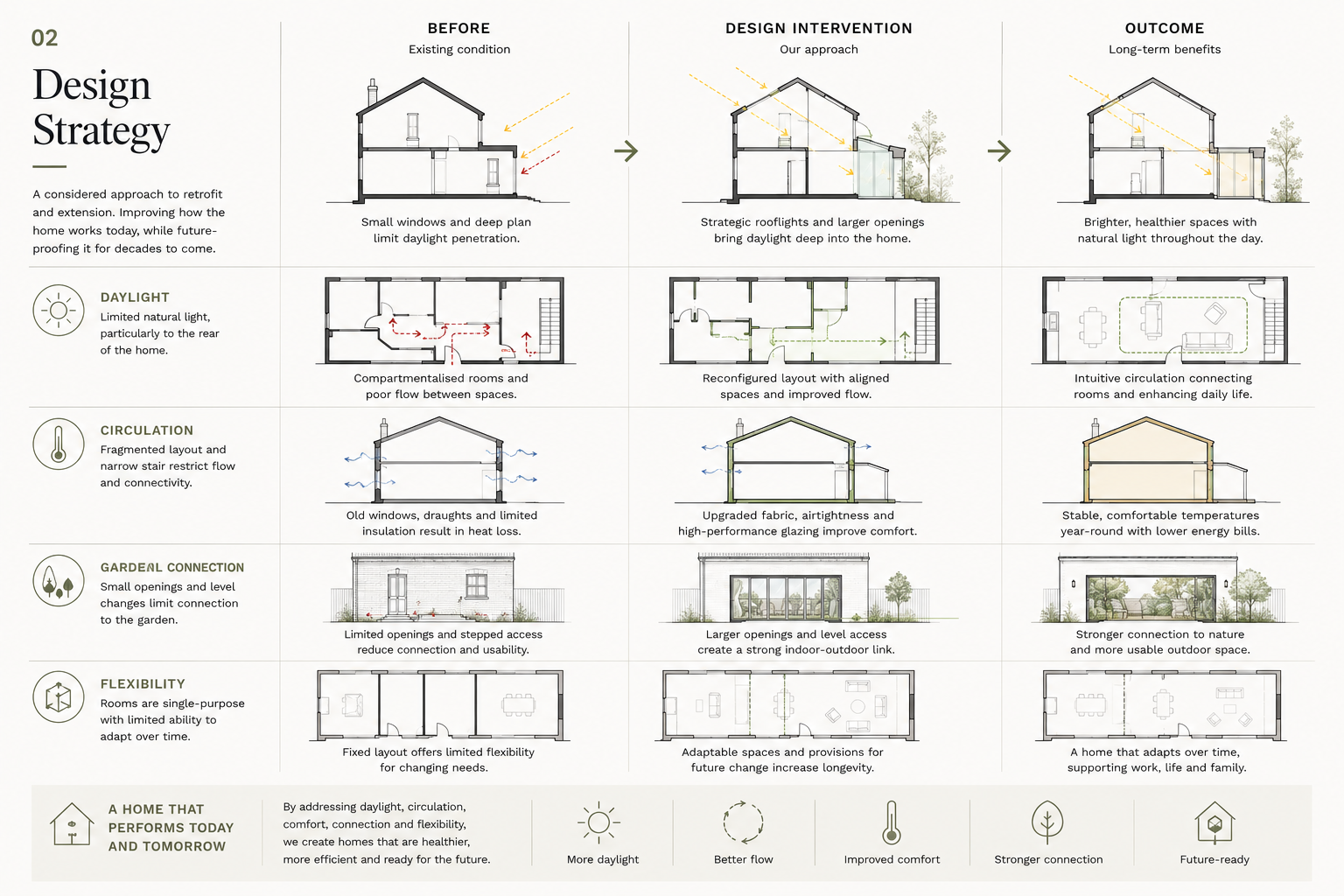
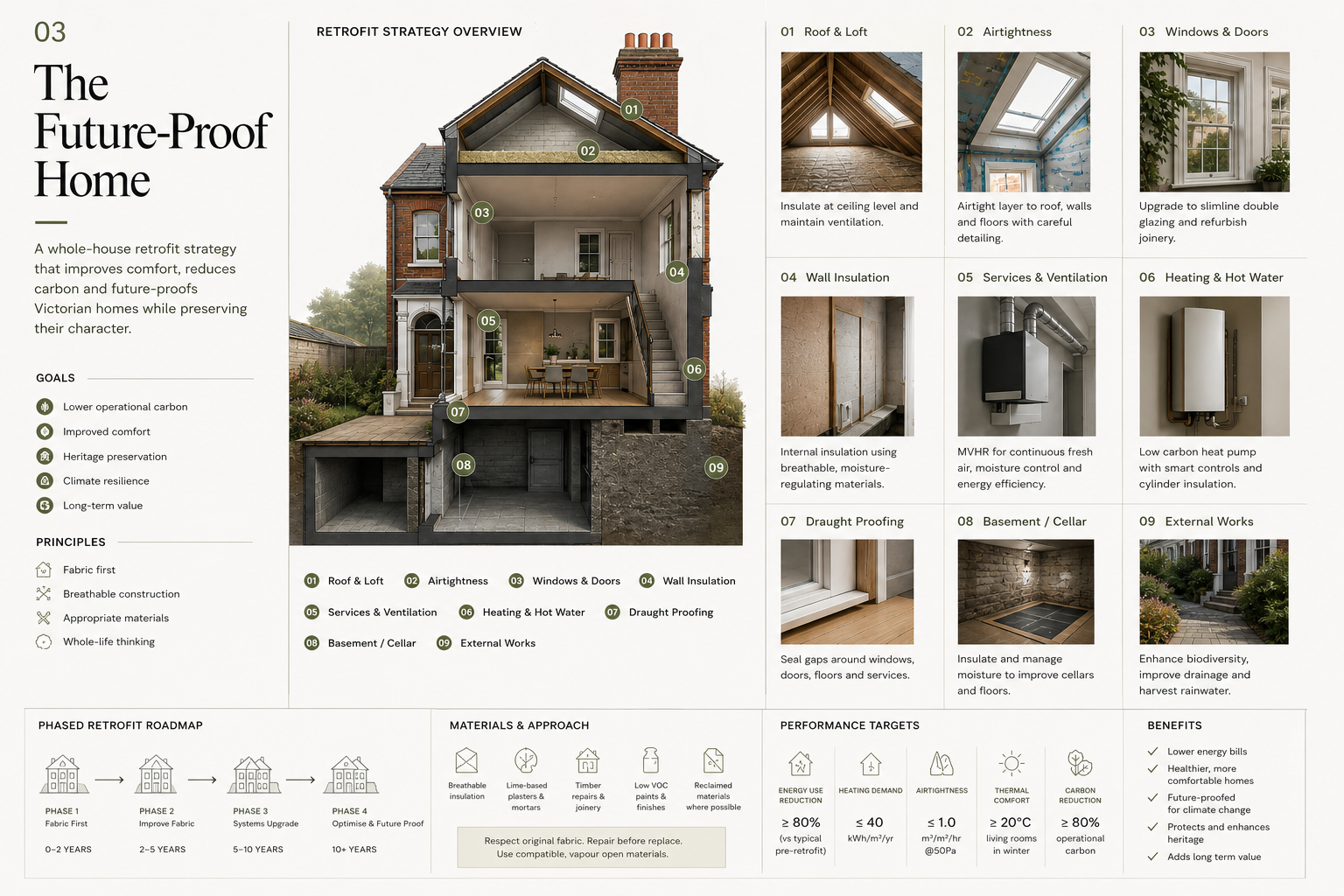
The outcome is a home that is brighter, healthier, more efficient and far more connected to its garden — created largely through intelligent transformation rather than additional floor area.
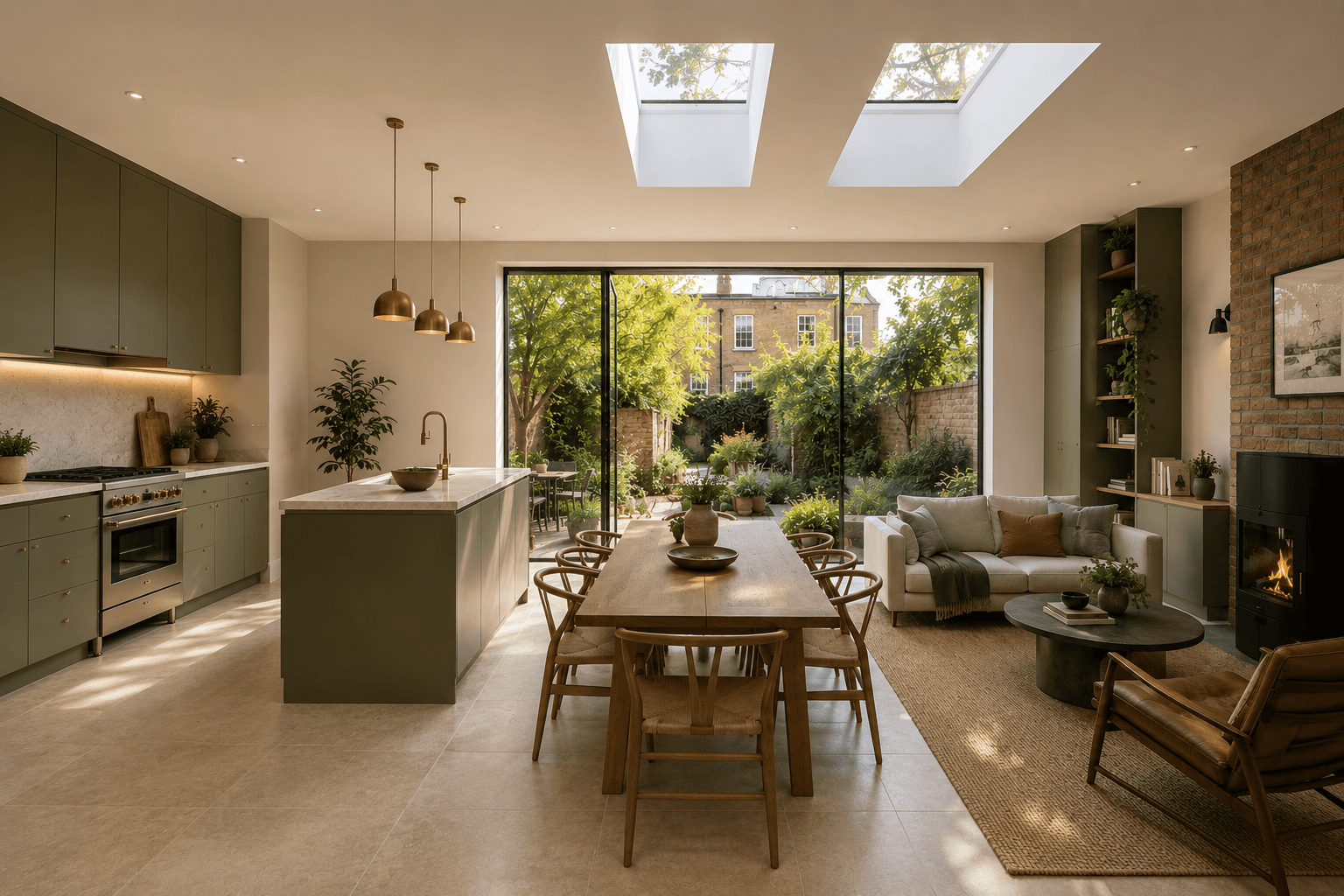
The Future-Proof Home
The future-proof home combines several characteristics:
- Low operational energy demand
- Reduced embodied carbon
- Healthy internal environments
- Flexible spatial planning
- Durable materials
- Long-term adaptability
- Strong architectural identity
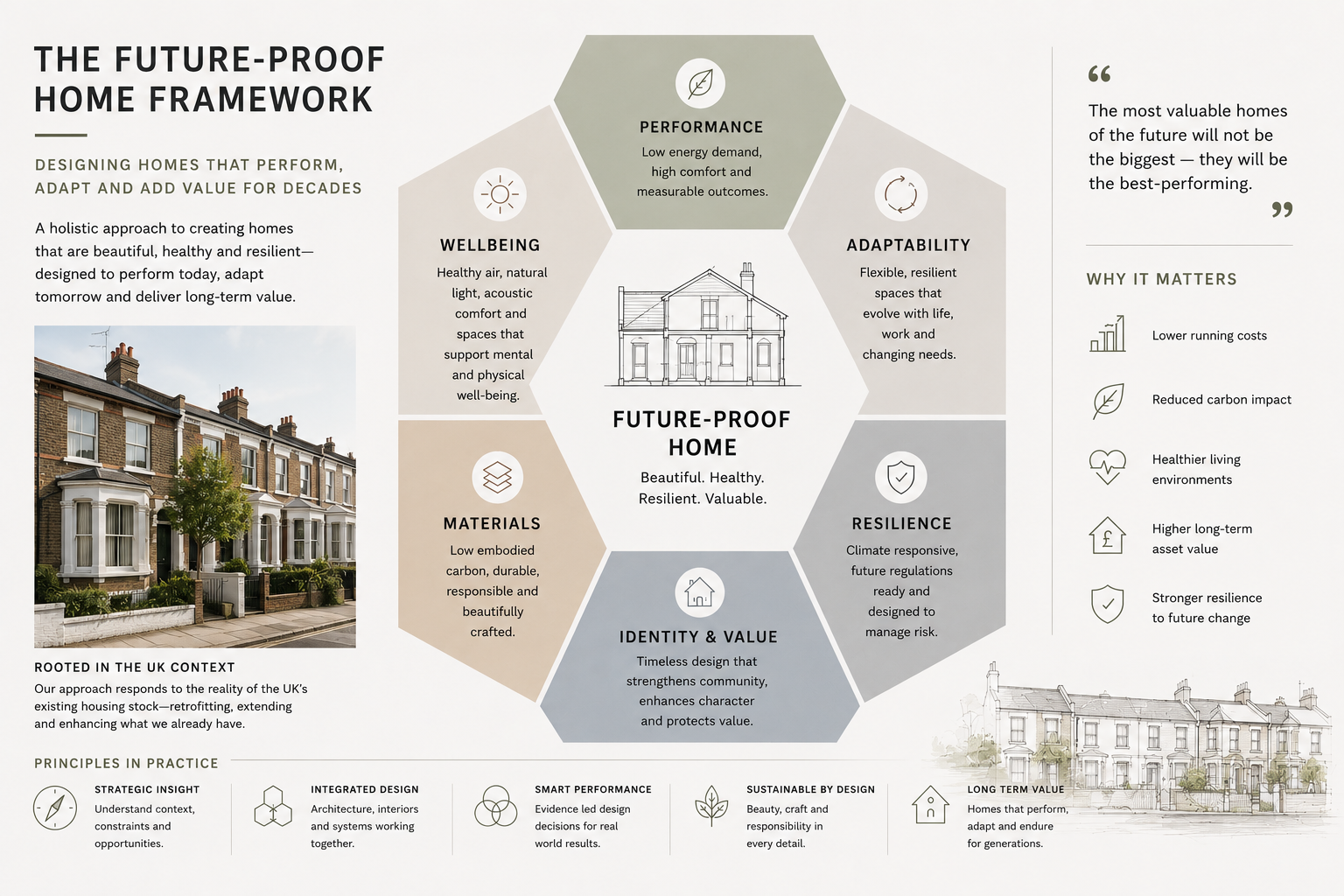
Importantly, these qualities do not exist independently. The most successful projects integrate them into a single design strategy.
What This Means For Clients
Whether we are working on a listed property, a family home, a boutique hospitality project or a new residential development, our role extends beyond creating beautiful spaces.
We help clients make informed long-term decisions. Decisions that balance:
- Design quality
- Planning constraints
- Sustainability objectives
- Operational performance
- Investment value
- Human experience
The buildings that will succeed over the next twenty years will not simply be larger. They will be smarter. They will perform better. And they will create measurable value for the people who live, work and invest within them.
Thinking About Your Next Project?
If you are considering a refurbishment, extension, retrofit or new-build residential project, Studio RDN-X can help you assess how design performance, sustainability and long-term value can work together from the earliest stages of the project.
Early strategic design decisions often have the greatest impact on cost, planning success, environmental performance and future asset value.